
HMDR Protocol Combining Hypnosis and EMDR
By Eli Sompo and Yael · 2026
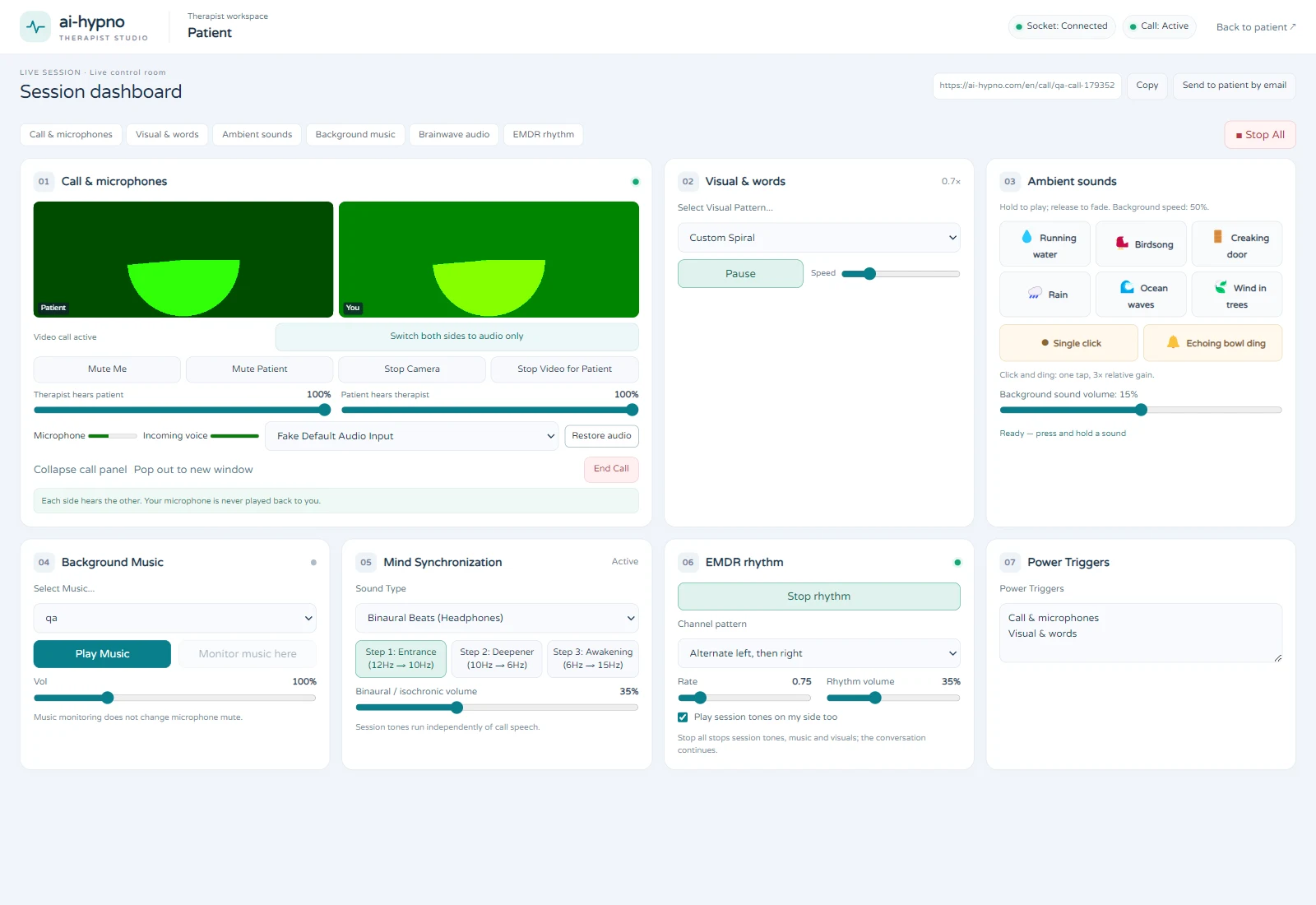
HMDR Protocol Combining Hypnosis and EMDR.
Eli Sompo and Yael, 2026
The protocol is intended for use in trauma treatment, releasing internal blocks, or instilling resources and skills. Introduction: Brain action mechanisms and the HMDR combination
What does the acronym HMDR stand for?
HMDR stands for Hypnosis & Movement Desensitization and Reprocessing (Hypnosis combined with desensitization and reprocessing via bilateral stimulation).
Brain Action Mechanisms: Hypnosis vs. Bilateral Stimulation (EMDR)
Hypnosis and EMDR act on different areas and mechanisms in the brain, thereby complementing each other:
- Hypnosis (Top-Down Processing): Operates through the brain's attention-oriented networks, primarily through the Prefrontal Cortex and the Anterior Cingulate Cortex (ACC). It allows for changes in perception, regulation of the Default Mode Network (DMN), increased mental flexibility, and lowering of cognitive resistances. Instructions and suggestions descend from the high (cognition and imagination) to the low (body sensations).
- Bilateral Stimulation / EMDR (Bottom-Up Processing): Acts directly on the limbic system, primarily on the Amygdala (fear center) and the Hippocampus (memory processing). Rhythmic bilateral stimulation mimics the REM sleep mechanism, places a load on the Working Memory, and lowers the arousal of the autonomic nervous system from the bottom (body and sensations) up (to the thinking brain).
Why is the combination (HMDR) so effective?
The combination creates bi-directional synchronization (Top-Down + Bottom-Up):
- Hypnosis provides rapid access to the subconscious, deep relaxation, bypassing of resistances, and a powerful capacity for controlled dissociation (such as barriers and anchors).
- Bilateral stimulation actively processes and dismantles the neurological coupling trapped in the amygdala.
- The combination allows for reaching the necessary emotional flooding in full safety, while rapidly releasing the trauma, block, or instilling the resource without uncontrolled flooding.
The Full HMDR Protocol (12 Stages)
Application Note: The protocol is intended for trauma treatment, releasing internal blocks, or instilling resources and skills. In all stages, bilateral stimulation is performed using the Butterfly Hug (Tapping) or auditory activation (stereophonic sounds), where the patient can move their eyes from side to side while they are closed.
Stage 1: Creating a Safe Space and Resource Installation
Identifying a positive memory, internal quality, resilience, or a safe place. The therapist guides the patient to connect fully to bodily sensations and positive emotions.
- Bilateral Stimulation: Activating short, slow sets of bilateral stimulation (butterfly hug or sounds, with closed-eye movement) to strengthen, deepen, and instill the resource into the nervous system.
Stage 2: Installing Control Tools (The Gauge / Button Anchor)
Before accessing complex content, the patient imagines and defines an internal anchor – a gauge or a regulation button (like a volume knob or intensity levels). Practice intentional movement of the gauge up and down in a calm state to ensure a sense of full control over the degree of emotional intensity.
Stage 3: Hypnotic Induction
Leading the patient into a hypnotic trance state using an induction technique of choice (physical relaxation, breathing, or guided imagery). The goal is a transition from relaxation to focused internal attention.
Stage 4: Deepening the Trance via Bilateral Stimulation (Deepening)
Using deepening suggestions (such as descending stairs or counting backward) combined with a sensory element.
- Bilateral Stimulation: Activating bilateral stimulation at a rhythmic and calm pace alongside the deepening instructions. The stimulation assists in lowering cognitive resistances and deepening the trance state.
Stage 5: Building and Instilling a Strong Safety Shield Barrier
Critical Goal: Preventing uncontrolled flooding or re-traumatization of the patient.
Guiding the patient to build in their imagination a powerful safety barrier (such as a protective wall, a one-way armored glass wall, or an impenetrable energy bubble) that partitions them from the event, the block, or the difficult emotion.
- Bilateral Stimulation for Instillation: Activating slow, strengthening sets of bilateral stimulation while testing the barrier's durability and instilling the feeling that no experience can harm them beyond this barrier.
Stage 6: Accessing the Trauma, Block, or Target (Targeting)
Bringing up the target event, the inhibiting block, or the challenge from within the protection of the safety barrier and the protected hypnotic space. Identifying the central image, the negative thought, and the accompanying physical sensation.
Stage 7: Flooding and Maximum Emotional Experience Openings (Emotional Flooding)
Giving full permission and guidance to the patient to connect directly (through the protected barrier) to the difficult emotions – pain, sadness, fear, helplessness, or anger. The patient is required to let these emotions rise and reach the maximum possible intensity (10 out of 10) within the protected space, to allow for the release and discharge of trapped energy.
Stage 8: Desensitization via Bilateral Stimulation (Desensitization)
While the emotion is at its peak, bilateral stimulation is activated.
- Bilateral Stimulation: Activating dynamic sets of bilateral stimulation (butterfly hug or sounds, moving closed eyes) at a fast or variable pace. The stimulation helps process the content, reduce brain arousal, and dismantle the coupling between the memory/block and the stress response.
Stage 9: Regulation and Intensity Reduction via the Control Button (Desensitization & Control)
The patient is guided to use the button or control gauge installed in Stage 2. The patient intentionally decides how much they want to lower the level of pain, sadness, or fear (for example, from 10 to 3 or to 0).
- Bilateral Stimulation: Simultaneously with lowering the gauge/button, slow and calming bilateral stimulation is activated to fixate the sense of control and sensory reduction in the brain and body.
Stage 10: Integrating Insights and Reframing (Reframing & Integration)
Eliciting new insights from the subconscious after the emotional load has decreased. The therapist offers hypnotic suggestions for reframing the event or block, emphasizing learning, resilience, survival, and separateness from the past.
Stage 11: Installing Positive Belief and Empowering Resources (Positive Installation)
Connecting the patient to a positive and empowering belief about themselves now (such as: "I am safe now", "I have control over my life", "I am capable of succeeding").
- Bilateral Stimulation: Activating short sets of bilateral stimulation alongside the resonance of the positive belief, in order to strengthen and rewire the positive pattern.
Stage 12: Re-orientation, Grounding, and Closure
Gradual exit from the hypnotic state (counting from 1 to 5, returning to full alertness, stretching, and touching the ground).
- Bilateral Stimulation (as needed): If momentary flooding or restlessness arises during the exit, slow bilateral stimulation is activated for rapid grounding, followed by a brief processing conversation and reflection in an alert state.